
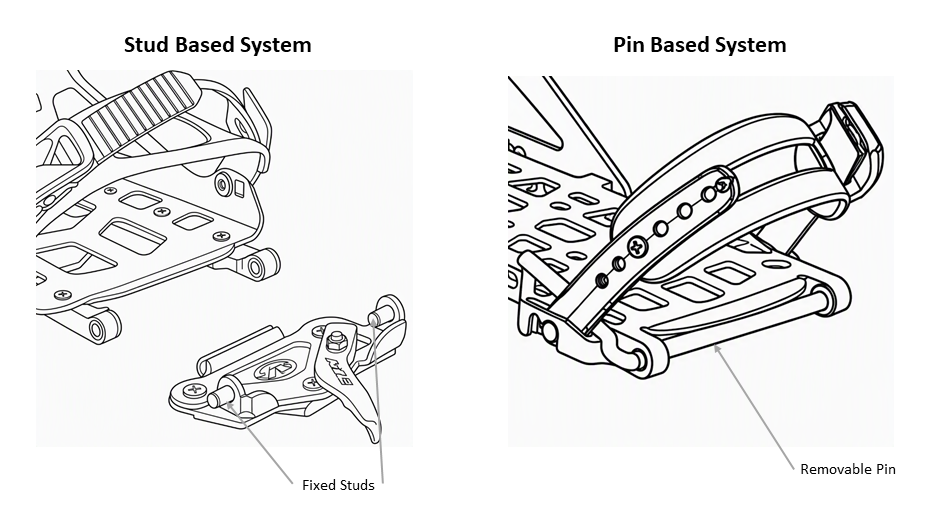
The union Charger bindings are the newest version of splitboard bindings available on the market. In a market that is dominated by Spark, Karakoram, and Voile it is welcoming to see a new player in the field. Union is known to be a binding power house in the resort and freestyle space. The truth is Union has had a splitboard binding for several years now with the Union Explorer. However because the Explorer utilized an aging pin based system it was largely over looked for more mature platforms. With Unions new Charger series they have redesigned the tech to employ studs rather than a cumbersome pin. In addition to the new tech Union brings its unmatched expertise in plastic and composite design to the splitboard binding arena. Prior to Unions bindings almost all splitboard bindings utilized aluminum bases. Aluminum is strong but it lacks the underfoot flex that traditional solid board bindings offer, resulting in a stiff and sloppy unconnected ride that degrades as the puck and binding channels wear out. Because the Union bindings utilize plastics and composites linked to the board in a proprietary system a significant portion of the underfoot flex is recaptured. Offering a ride that rivals some solid board setups. It is the community’s general consensus that the Union sweet of splitboard bindings offers a better downhill ride than their aluminum competitors.
Now it is not my intent to convince you which bindings are right for you. I would suggest you do your own homework to decide. This blog post is to bring to light a potential part damaging condition that can unknowingly arise when a step in the binding set up is missed, skipped or done incorrectly or when the bindings are inappropriately sized.
The condition presents in the touring mode and can permanently damage and deform the studs of the touring bracket. In simple terms an oversized binding or incorrect heel cup setting can allow this condition to arise.
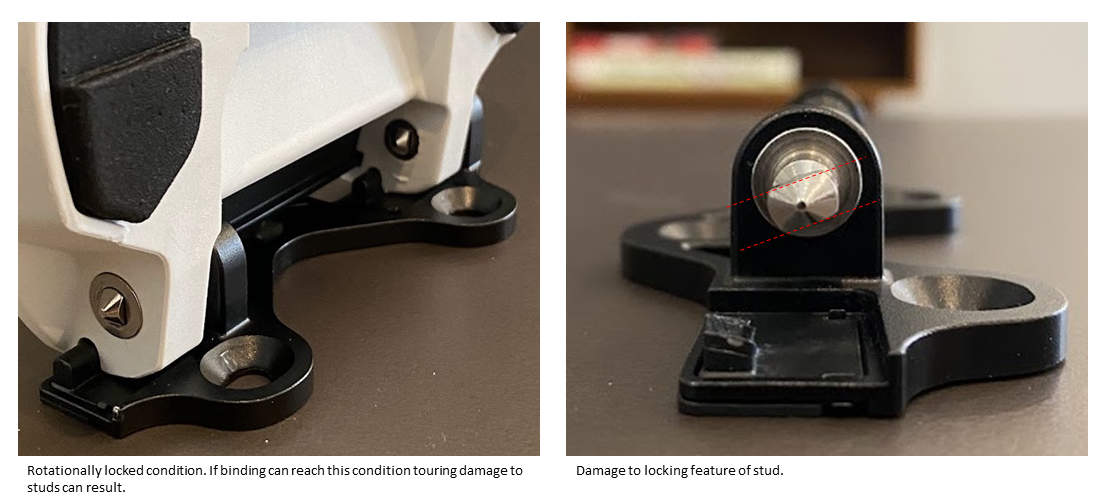
Ok I will attempt to explain the functionality of the Charger binding and the failure mode. The charger system utilizes two studs that are positioned in the pivot holes of the binding these studs utilize a unique and proprietary system to lock the binding onto the studs. In the Spark system this lock is achieved with a toe latch and a cleaver plastic boss. Most likely due to a patent this system was not available to Union. Hence they developed their own system to get around Sparks patent. Unions system employs no moving parts and takes advantage of the fact that when the binding is placed on the stud your foot will not be in it. For Unions system you must place the binding 90 degrees to the board then the binding will slide onto the studs. The 90 degree position is the only position where the binding is unlocked from the stud. Any angle less than 90 degrees and the clever geometry of the stud prevents the binding from disengaging with the stud. Hence when it is desired to remove the binding you simply pivot the binding to 90 degrees and tap the binding loose. Now the intent is that when your foot is in the binding your toe overhang will prevent the binding from achieving 90 degrees and therefore the binding and stud will never unlock in normal touring mode. However if the binding is too large for your foot or the heel cup is set back too far the toe over hang may be insufficient to prevent the binding from reaching 90 degrees which becomes more possible on kick turns on steeper slopes. If the binding comes unlocked one of two conditions may occur. One the binding may slip of and become separated from the board. In which case you can simply remove the binding from your foot and reinstall it on the studs. The second condition that may occur is if instead of slipping off completely the binding partially disengages from the studs. If this occurs once you go to complete the step the torque generated at the stud may wrench the flat keyed section of the stud. Once the studs have been wrenched the system may appear fine and function normally but when you go to remove the binding for your transition, you will find that the binding is stuck on the stud and out of sync with the lower plastic boss. You may need to modify or remove the touring bracket to get it off. If you don’t have any tools this could be problematic.
Below are examples of acceptable and unacceptable boot binding heel cup positions.
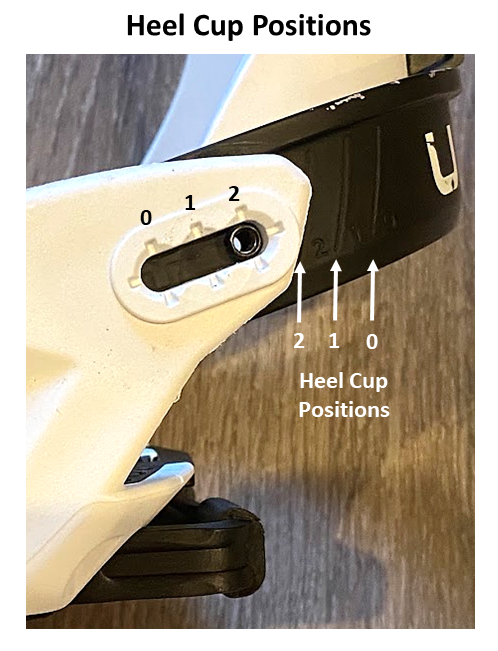
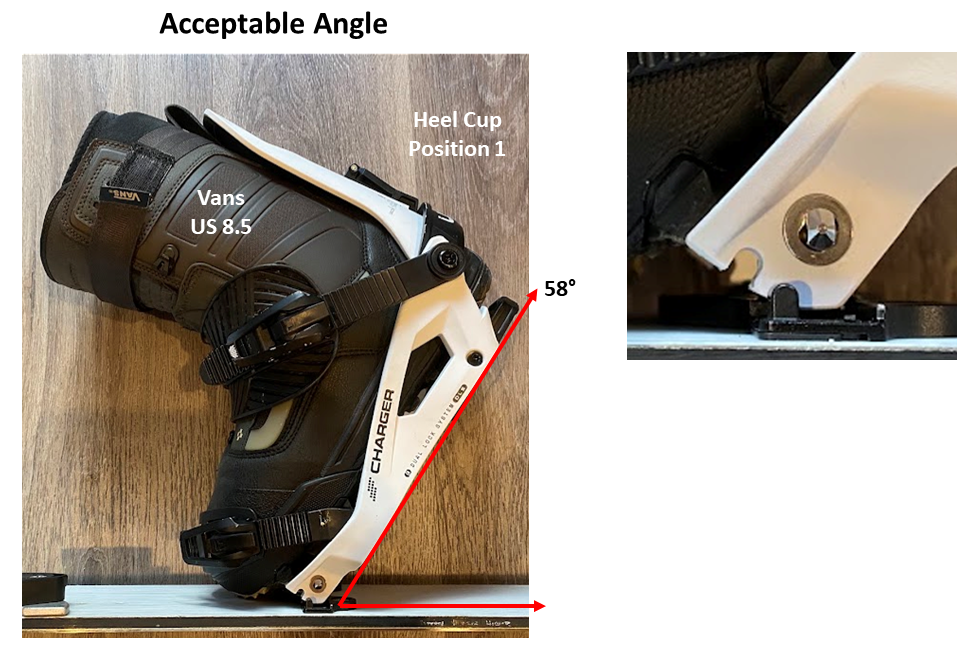
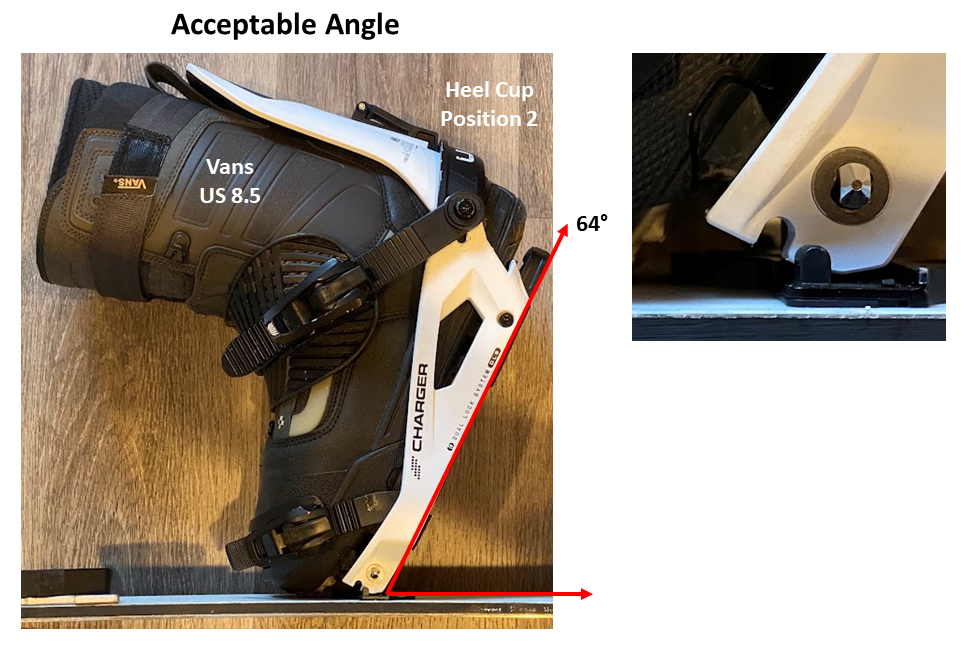
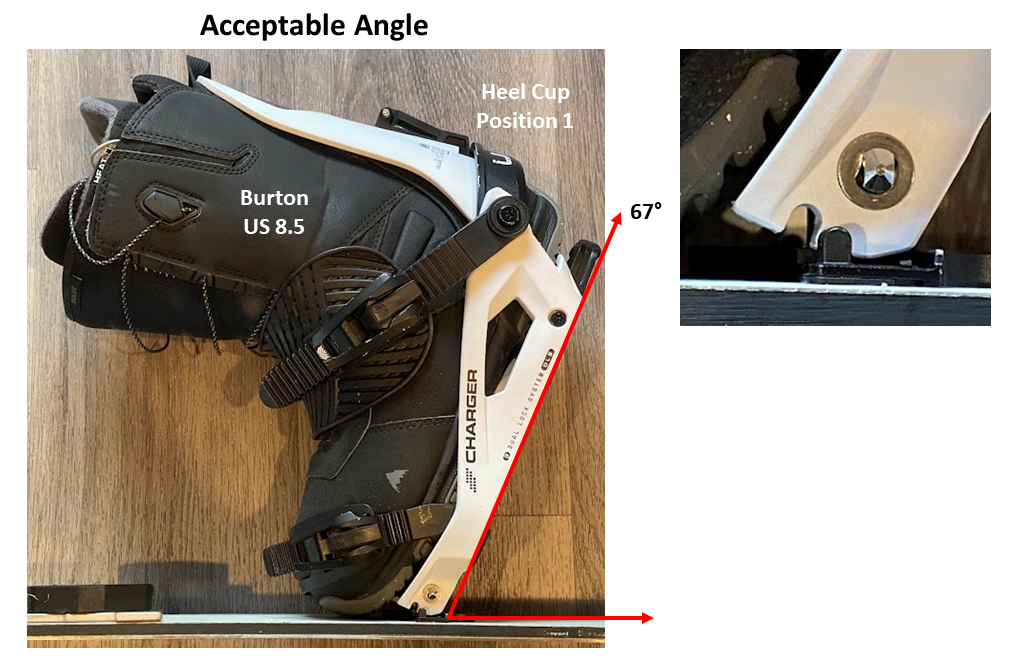
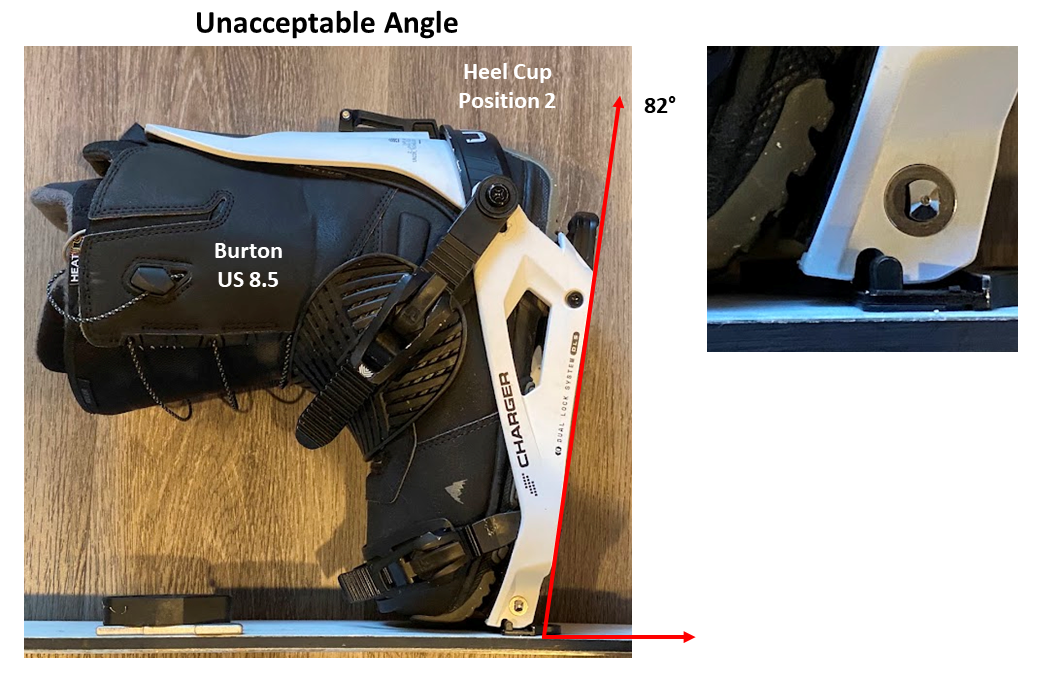
I am detailing this issue because it happened to me on a tour in the eastern Sierra. I don’t know when the actual damage occurred but I discovered it at the summit. Luckily I had a multitool so I could cut off the plastic bosses and remove the binding from touring mode. For reference I was running my Burton boots size US 8.5 with the heel cup in the number 2 position. This toe overhang was allowing an approximately 82 degree angle (note the lock disengages at 90 degrees). Below are some images that I sent to Union to notify their engineering team of the potential for this condition. Good news is Union replaced my touring brackets no additional questions asked. Even better news is If you size and setup your bindings correctly it will be impossible for your binding to achieve 90 degrees when touring.
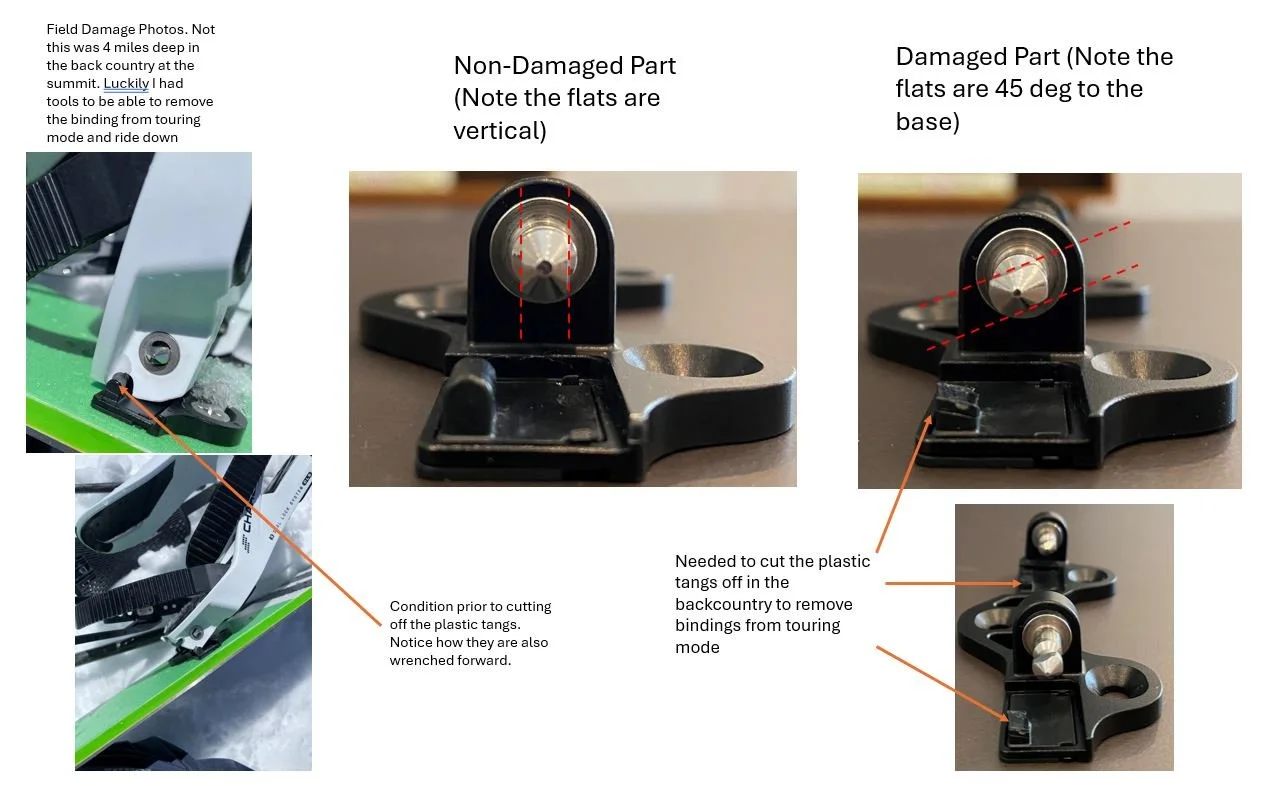
Steps to take when setting up your bindings to ensure that this issue does not surprise you!
First make sure the bindings you purchase are correctly sized for your boot size (link to Unions size chart).
Once you install your bindings adjust the heel cups to center the binding to the board in ride mode.
Finally, install the binding into touring mode and mount your boot into the binding. Flex the binding/boot up as far as you can until the toe of the boot stops it. If that angle is at least 15 degrees shy of 90 degrees then the fit and set up is complete. If not adjust the heel cup to give more toe overhang.
Following the above steps will ensure this problem will not strike when it is most inconvenient. Some people on Reddit are convinced that the Union Chargers are not a serious binding and are more geared towards front country travel. I fully disagree with this assessment. Plastics and composites have matured to a level that they are equally as reliable as metals. The Union Charger system is fully capable of deep backcountry travel, as long as the user has a full understanding of the system they are using and have a plan for breakdowns and malfunctions which can occur on any system.